Science

Anti-nephrin autoantibodies: a promising biomarker in nephrology

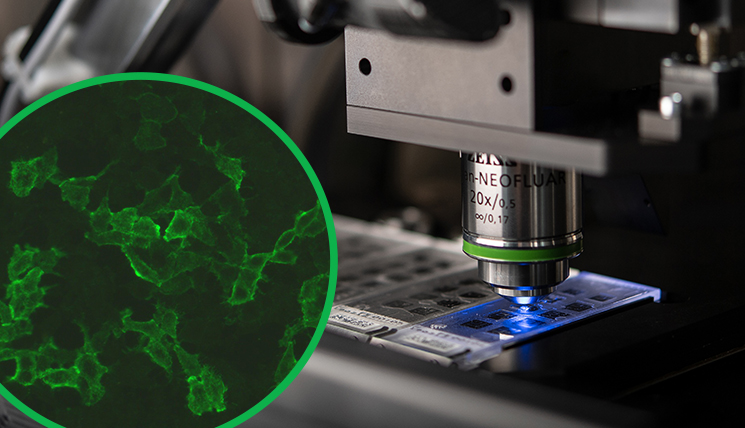
A current multicentre study shows that anti-nephrin autoantibodies can be a reliable biomarker for idiopathic nephrotic syndrome, which occurs in diseases such as minimal change disease (MCD). These antibodies were much more frequent in patients with the respective diseases than in those with other kidney diseases or in healthy persons. The antibody level also correlates […]

Products

Circulating calprotectin – a new promising inflammation parameter

With passion for rheumatology! The evaluation of the inflammatory status is crucial for the assessment of disease activity and therapy response in systemic autoimmune rheumatic diseases such as rheumatoid arthritis, systemic sclerosis, psoriasis arthritis or microscopic polyangiitis. A promising new biomarker in this context is the increasingly important inflammation parameter circulating calprotectin (cCALP). Calprotectin in

Products, Science

New patterns in ANA diagnostics

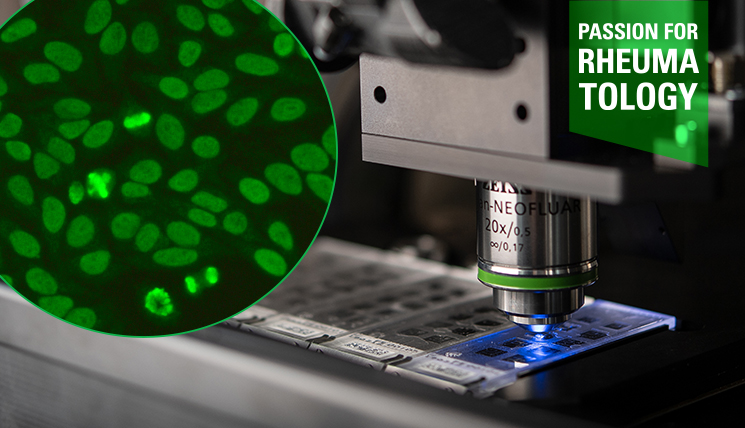
With passion for rheumatology! Recently, three new fluorescence patterns were added to the classification tree of the International Consensus on Antinuclear Antibody Patterns (ICAP)1. ICAP is an initiative of international scientists with the goal of evaluating the large number of ANA patterns in a standardised way. ANA (antinuclear antibodies) are biomarkers for different autoimmune diseases,

Products, Science

Another piece of the puzzle in rheumatological diagnostics

With passion for rheumatology! Systemic autoimmune rheumatic diseases encompass a wide range of different inflammatory joint, tissue and vascular diseases, such as rheumatoid arthritis, systemic lupus erythematosus and systemic sclerosis. They are diagnosed on the clinical history, imaging techniques, and serological tests. Antibody detection is a useful diagnostic tool and can provide essential information for

Products

The new potential gold standard for myasthenia gravis autoantibody diagnostics

Myasthenia gravis (MG) is an autoimmune-mediated myasthenic disorder with the main symptom of exertion-related muscle weakness. The disease results from functional loss of the nicotinic acetylcholine receptors (AChR) at the motor end plate due to attacks of different autoantibodies (AAb). Autoantibodies against nicotinic AChR are detected in around 80% of MG patients. AAb against muscle-specific

Scroll to Top