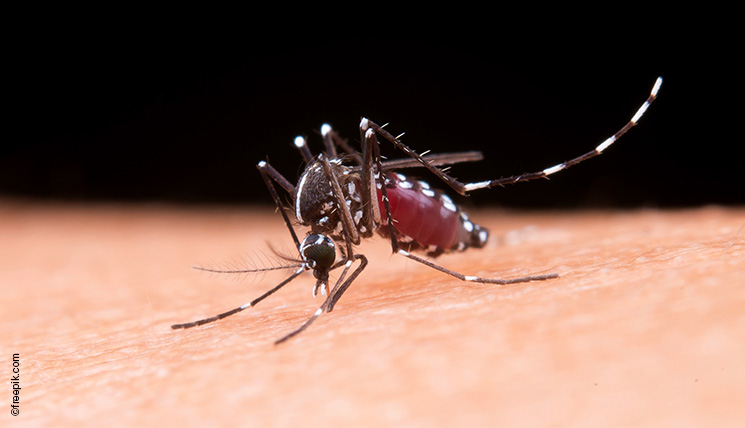
Climate change, population growth, global travel and shifting lifestyles all increase both how likely and how quickly infectious diseases spread. This is especially true for arboviruses, which are vector-borne and include dengue virus, chikungunya virus and Oropouche virus.
Oropouche fever in Brazil
Brazil is a powerful example: Since the end of 2023, the incidence of Oropouche virus (OROV) infections has increased significantly to at least 11,988 cases in 2025, and 5 deaths reported. While outbreaks used to be limited to the rainforest, they now also reach urban areas located far away from the Amazonas region. A similar scenario has previously been seen with other pathogens such as Zika virus. The data emphasise the clinical relevance of Oropouche fever as an “emerging disease” and the need for thorough epidemiological monitoring. This is challenging, however, as the clinical picture of OROV infection may be unspecific and is often indistinguishable from that of dengue, chikungunya or Zika virus infection. But differential diagnostics are very important as neurological and haemorrhagic manifestations as well as severe foetal damage in infections during pregnancy are discussed in connection with OROV infections.
Anti-Oropouche virus ELISAs
Given this situation, Euroimmun Brazil has launched the first serological tests on the Brazilian market to aid in the diagnosis of Oropouche fever. The new ANVISA-approved Anti-Oropouche Virus ELISA (IgM)/(IgG) allow to determine IgM or IgG antibodies against the virus reliably. They will also be launched on the European market as CE-marked in vitro diagnostic medical devices shortly.
The detailed blog article from our Brazilian subsidiary can be found here:
Lançamento Euroimmun: diagnóstico sorológico da Febre do Oropouche (ELISA IgM/IgG) com registro Anvisa – Artigos Euroimmun Brasil
Euroimmun also has a wide portfolio to support differential diagnostics of arbovirus infections (e.g. with dengue, Zika or chikungunya virus and others). Visit our website for more information.