
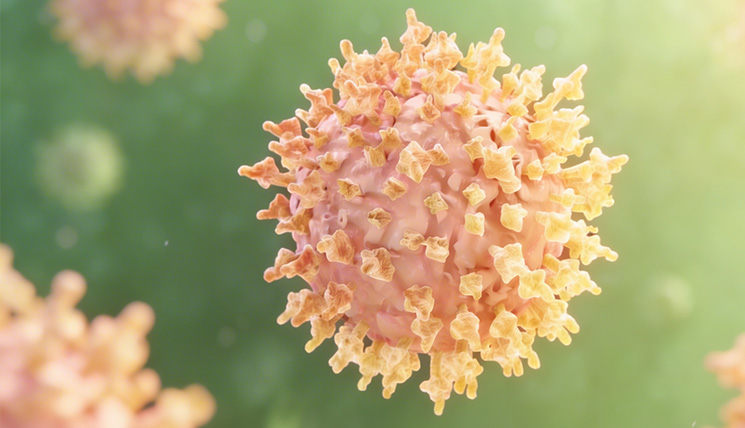
For some time now, alphaviruses, including well-known viruses like chikungunya virus, have not only been a problem in tropical regions. Due to climate change and the associated spread of mosquitoes as vectors the number of documented infections is also on the rise in Europe. Precise diagnostics and epidemiological monitoring are becoming more and more important to identify infections early and take suitable measures in case of outbreaks.
A diagnostic challenge
Serological diagnostics are based on the detection of virus-specific antibodies. However, cross reactions are common due to high antigen homologies within the alphavirus genus. This means that positive antibody test results cannot be clearly attributed to a specific virus, limiting the significance of conventional test systems. In contrast, the current gold standard, the virus neutralisation test (VNT), offers a high specificity but requires a lot of time and resources, making it impractical for routine laboratories.
Improved coverage
The goal of the project OPT-ALPHA is to cover this diagnostic gap. As part of this joint project, the Fraunhofer Institute for Cell Therapy and Immunology IZI, the Charité Institute of Virology and Euroimmun are developing a test system to reliably distinguish antibodies against different alphaviruses. The Fraunhofer Institute contributes its expertise in the development of serological assays and the manufacturing of recombinant antigens and the Charité takes on the validation using clearly characterised patient sera, while Euroimmun will be responsible for transferring the resulting prototype to a marketable product.
The goal is a commercially available test system that
- offers high sensitivity and specificity,
- can be used quickly and efficiently in routine operation and
- can be processed in conventional laboratories (no specialised laboratory required).
The project is funded as a trilateral transfer project by the German Research Foundation and the Fraunhofer Institute.
